Modules and interactions
This section introduces the basic components of an agent service market: blockchains, tokens, wallets, payment protocols, and communication and coordination between agents.
The system consists of five main modules: Ledger, Wallet, Payment, Agent, and Task.
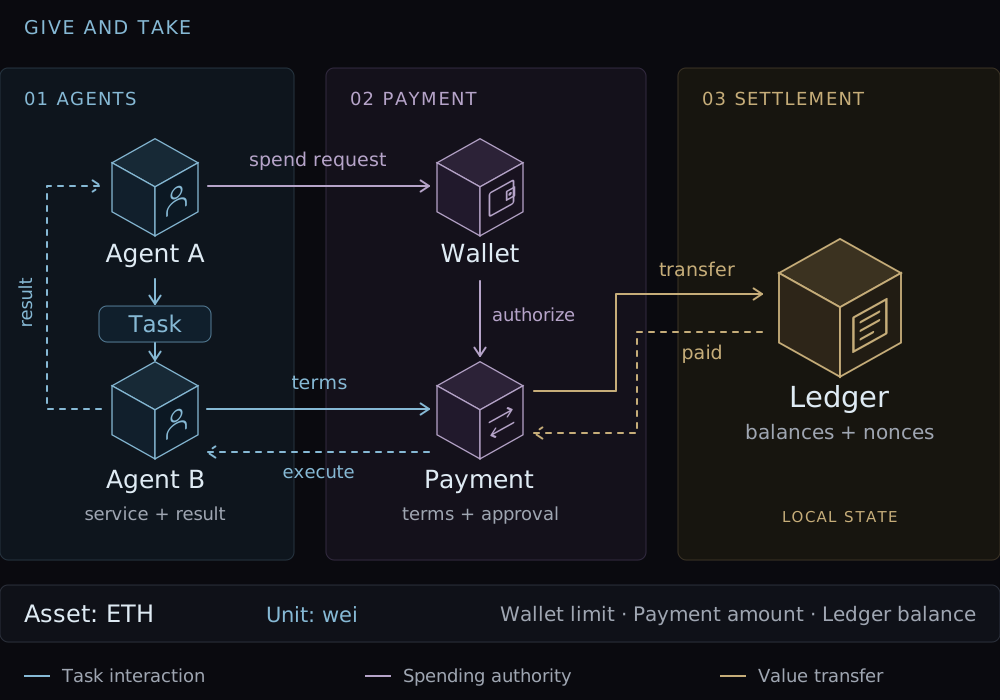
The diagram shows one payment-before-execution flow between these modules.
Ledger represents local settlement state.
Quantities and units defines the energy, time, amounts, and fees used to describe resource consumption and payments across this environment.
Infrastructure references
We use these projects as references for the components in the diagram:
- Ledger: Ethereum execution-specs for account state and transaction execution; Solana and Agave for program-owned accounts and access conflicts. Bitcoin supplies the UTXO and payment-history reference. Study notes.
- Asset and Amount: OpenZeppelin Contracts for ERC-20 balances, units, and transfers; USDC for stablecoin pricing, payments, and the role of reserves and redemption. Study notes.
- Wallet: PASS's wallet model for wallet accounts and transaction processing. Study notes.
- Payment: x402 for payment exchange; AP2 for authorization evidence; Circle Gateway for batched settlement; and Nevermined for metering and billing. Study notes.
- Agent and Task: A2A for capability discovery, messages, and task states. Study notes.